Average Rice Purity Score and What Your Score Really Means
The Average Rice Purity Score for most teenagers and college students usually falls between 60 and 80, though age, campus culture, and social lifestyle all affect results. The Rice Purity Test became a viral Gen Z trend through TikTok, Reddit, and anonymous score-sharing posts where users compare experiences and “purity levels.”
Many people take the quiz once, get a score, then immediately wonder whether it’s high, low, or completely average.
Here’s the thing: there is no officially “good” or “bad” score. The test measures experiences, not morality.
This guide works best for casual score comparisons and understanding common Rice Purity Test ranges. The quiz is entertainment-based, not a scientific personality or psychological assessment.
What Is the Average Rice Purity Score?
Average Rice Purity Score refers to the typical result users get on the Rice Purity Test, a viral 100-question college purity test originally linked to student social bonding. Higher scores suggest fewer life experiences, while lower scores suggest broader social or relationship experiences.
The original test came from students at Rice University as a social activity for freshmen during orientation periods.
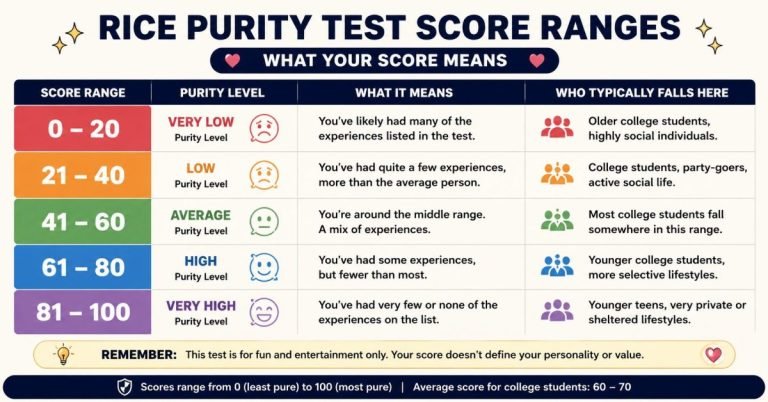
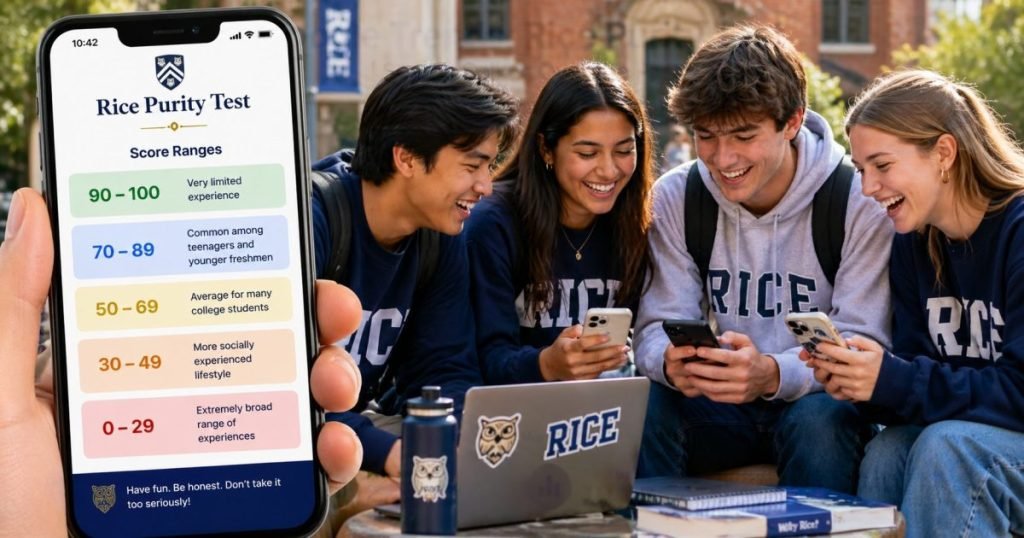
Most online discussions and score-sharing trends suggest these averages:
Quick Comparison
A lot depends on environment. Someone attending a strict religious school may score very differently from students living in large party-oriented campuses.
Anyway, context matters more than people admit online.
Why Most College Students Score Between 60 and 80
The average rice purity test score for college students is commonly estimated between 60 and 80. Discussions across Reddit and TikTok trends suggest freshmen usually score higher than seniors because experience levels change during college years.
The test reflects lifestyle exposure more than personality quality.
Why the Test Is More About Context Than Morality
What your rice purity score means depends heavily on age and social environment. The quiz originally worked as a social icebreaker rather than a judgment tool.
A lower score does not automatically mean risky behavior, and a higher score does not automatically mean innocence.
According to a 2024 report from Pew Research Center, Gen Z users are highly likely to participate in viral online trends and personality-style quizzes shared through short-form video platforms.
Rice Purity Score Meaning Explained
People obsess over numbers here.
But the rice purity score meaning is usually much simpler than social media makes it sound.
Score Ranges and What They Typically Suggest
Look — if you’re in the 70–85 range, here’s what actually works: stop comparing yourself to viral TikTok comments. That range is incredibly common.
Users who’ve tried comparing scores online often report the same problem: their friend group becomes the “normal” baseline, even when it’s statistically unusual.
Why People Get Weirdly Emotional About Their Score
The test feels personal even though it’s mostly entertainment.
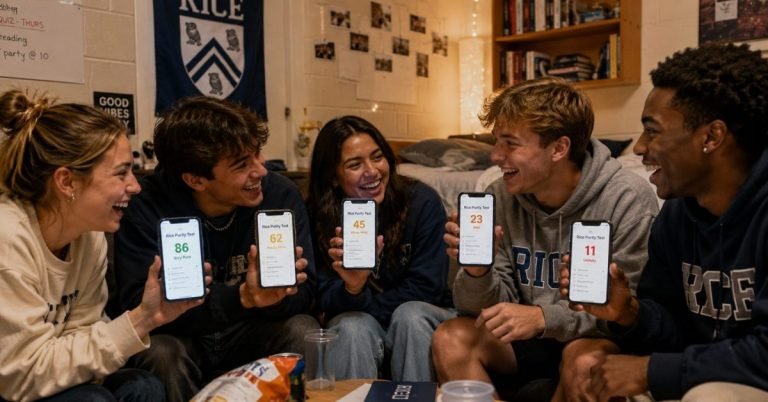
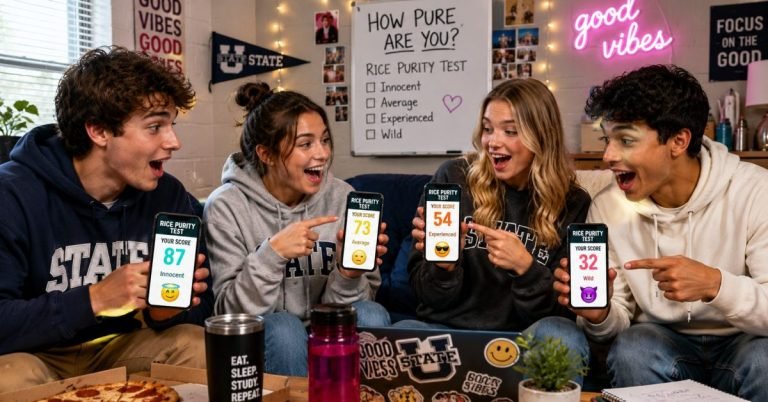
Many users compare scores because they want reassurance that they’re “normal” for their age group or social circle. Others feel embarrassed after seeing extreme scores posted on TikTok or Reddit.
That reaction is more common than people admit.
The interesting part is that the Rice Purity Test creates instant peer comparison psychology. Users are not really measuring morality. They’re measuring belonging.
Is 70 a Good Rice Purity Score?
Yes. For most users aged 16–22, a score around 70 is completely normal.
Some people online act like anything above 90 is “too innocent” and anything below 30 is “cool.” That logic falls apart quickly. The test mixes harmless experiences with serious ones, which makes direct comparison messy.
Or maybe I should say it this way…
The score reflects exposure, not maturity.
How Scores Usually Change With Age
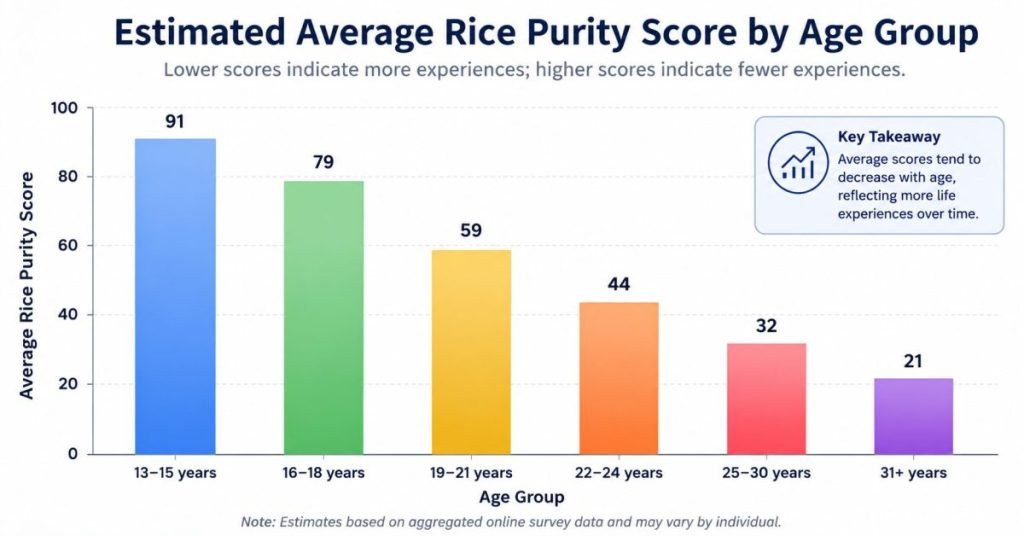
The average rice purity score by age changes noticeably during college years. Students entering college often score above 85, while graduating seniors frequently land between 50 and 70 because their social experiences expand over time.
Internet personality quizzes → “viral personality quiz trends”
Average Rice Purity Test Score by Age
This is where most articles stay vague. Realistically, age changes everything.
Teenagers (14–17)
Most teenagers score between 85 and 98.
That’s expected because many questions involve adult experiences, dating, or college social life. A very high score at this age is not unusual at all.
College Students (18–22)
This group creates most search traffic for the average rice purity test score for college students.
Freshmen often land around 80–90. Seniors trend lower.
Some experts argue online averages are unreliable because users fake scores for attention. That’s valid for viral TikTok challenges. But if you’re dealing with large Reddit discussions and anonymous score sharing, patterns still appear surprisingly consistent.
Quick note: campus culture changes averages dramatically. Dorm culture, commuter universities, and party schools produce very different score trends.
Young Adults (23–28)
Scores become harder to predict.
Some users settle into stable relationships and score moderately high. Others accumulate broader social experiences and score much lower. I’ve seen conflicting data, some sources say the average purity score stays near 60, others place it closer to 45. My read is that online samples skew younger, which artificially raises “average” results.
Low vs High Rice Purity Score Explained
A lot of users secretly want validation.
That’s why comparison content performs so well on TikTok and Reddit.
High Scores (80–100)
Higher scores often mean:
- Less dating experience
- Fewer risky situations
- Younger age group
- More private lifestyle
That does not automatically mean someone lacks confidence or social skills.
Lower Scores (0–50)
Lower scores may reflect:
- More relationships
- Greater social exposure
- Older age
- Different cultural environment
Some people treat low scores like trophies online. Personally, I think that mindset misses the point because the test was originally designed as a conversation starter, not a competition leaderboard.
High Rice Purity Score vs Low Rice Purity Score
High scores fit users with fewer life experiences or younger age groups because they answered “no” to more questions. Lower scores work differently because they reflect broader experiences.
The key difference is exposure level, not personal value.
Platform Trends and Score Sharing
What most guides skip is privacy.
Several “rice purity score calculator online” sites collect unnecessary tracking data or request social logins. Stick to simple quiz pages that don’t require accounts.
How Accurate Is the Rice Purity Test?
Short answer: not very scientific.
The rice purity test is entertainment first, personality insight second.
It has no clinical validation, psychological scoring standard, or academic credibility comparable to real personality testing systems.
Still, users relate to it emotionally because it triggers social comparison. That’s why it spreads aggressively on platforms like TikTok and Reddit.
Most Common Mistakes Users Make
- Comparing scores across totally different age groups
- Assuming lower always means “better”
- Sharing scores publicly without privacy awareness
To interpret your score better, follow these steps:
- Compare within your age range.
- Ignore exaggerated TikTok reactions.
- Focus on context, not numbers.
That alone fixes most confusion.
Counter-Intuitive Insight
Most people assume college students score extremely low. The available online discussion data actually suggests mid-range scores are far more common than extreme ones.
The “wild college life” stereotype gets exaggerated online.
online privacy habits → “protecting personal data on viral quiz sites”
What Your Rice Purity Score Really Says About You
Less than people think.
A score cannot measure kindness, emotional intelligence, ambition, loyalty, or maturity. It only tracks whether certain experiences happened.
That’s it.
The test survives because it creates instant social comparison and curiosity. Gen Z especially treats it as a mix of meme, bonding exercise, and awkward honesty challenge.
And honestly, that’s probably why it keeps trending every year.
FAQs About Average Rice Purity Score
Q: What’s the most common rice purity score?
A: Most online discussions suggest scores between 60 and 80 are the most common for college students and young adults.
Q: What’s the best rice purity score to have?
A: There isn’t one. Most users simply compare scores within similar age groups and social environments.
Q: How do I calculate my rice purity score?
A: Most online versions subtract checked experiences from 100 to generate your final score using a rice purity score calculator system.
Q: Should I worry if my score is very low?
A: Usually no. The score reflects experiences, not morality or mental health.
Q: Why does the Rice Purity Test go viral every year?
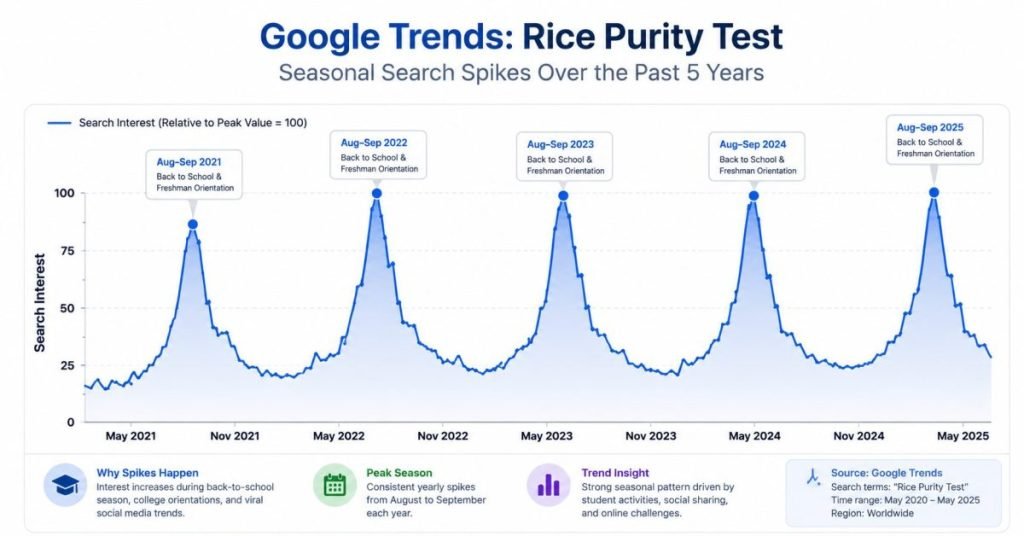
A: College admissions season, freshman orientation periods, and TikTok trends repeatedly bring new users into the quiz.
Q: When should I ignore score comparisons?
A: Ignore them when comparing across major age, culture, or lifestyle differences.
Conclusion
Most people take the Rice Purity Test for fun, but the score often becomes a way to compare experiences, friendships, and college culture. In reality, there’s no perfect number. A high score, low score, or average rice purity score simply reflects different life experiences, not personal value or maturity.